
San Mateo County Directory Landscape
San Mateo County people directories do not form one master list. A city directory answers a different question from a deed index or a school staff search. Municipal and education listings show current public work contacts. RecorderWorks lists parties to recorded documents. Business and license systems identify public filing or license details. Library and archive collections reach residents who disappeared from current web listings years ago.
| Local directory | People or entries shown | Keeper | How to use it |
|---|---|---|---|
| City of San Mateo directory | Officials, staff, and departments | City of San Mateo | Free public web list |
| SMCOE staff directory | County education staff | County Office of Education | Name, keyword, or department search |
| SMCCCD directory | College faculty and staff | Community college district | Public directory landing page |
| RecorderWorks | Grantors, grantees, and filing parties | County Clerk-Recorder | Free index from 1985 forward |
| Business and license indexes | Registrants, entities, and licensees | County and state agencies | Fielded online searches |
| Historical city directories | Past residents and businesses | Local libraries and archives | Web, library, or appointment access |
Start with the source closest to the person's role. A named city worker belongs in a municipal listing. An educator may appear in SMCOE or a college directory. A former resident is more likely to surface in a city directory, newspaper index, deed entry, or mortuary file. County and city boundaries matter, particularly for permits and business licenses.
San Mateo County Government Directories
The City of San Mateo directory groups people and service contacts by category. Entries can include a linked name, title, department, email, and direct or main phone. It covers such offices as the City Clerk, City Manager, Library, Public Works, Police, and Community Development. County Planning also publishes a staff directory, while department rosters route users to county services and elected offices.
The City of San Mateo directory screen shows how those public contacts are organized.
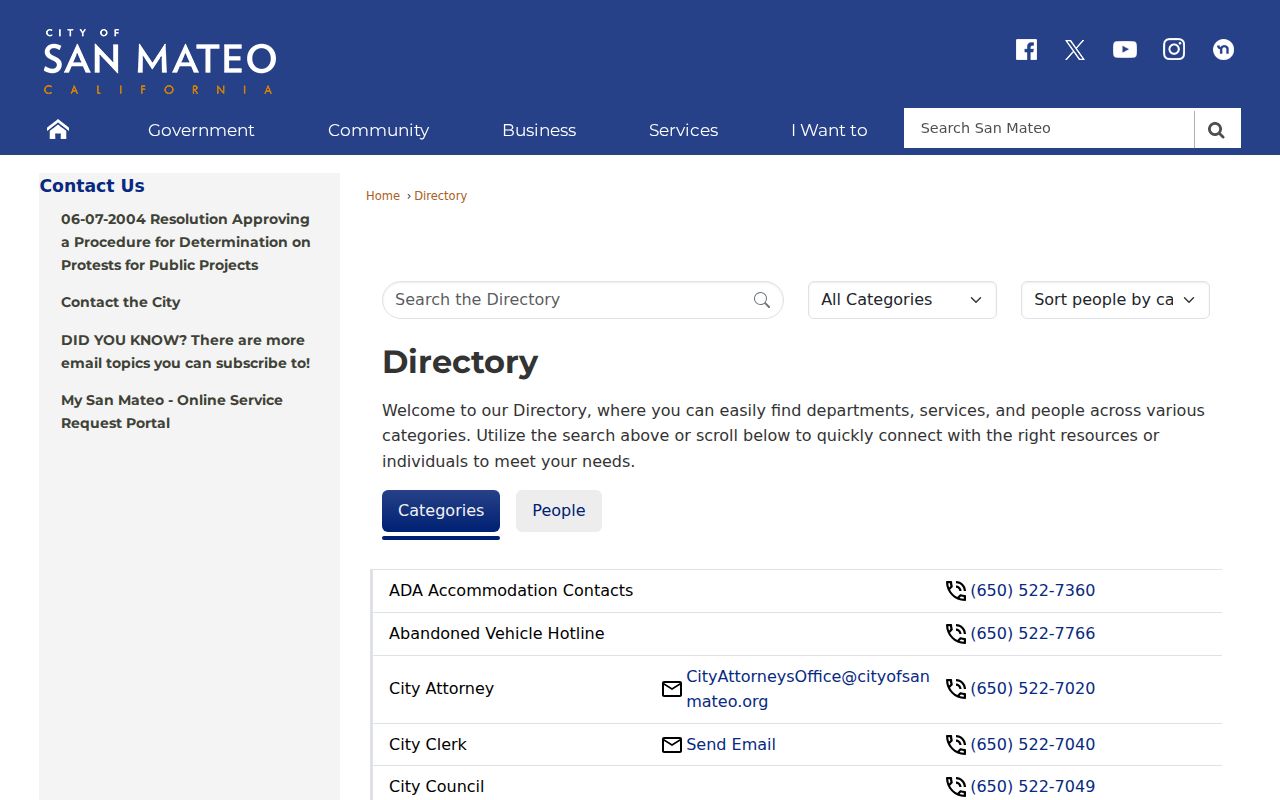
The mix of person entries and department lines makes the directory useful even when the exact staff name is unknown.
| Entry name | Linked person or department contact |
|---|---|
| Role | Title, department, or service category |
| Contact | Published work email and phone |
| Fallback | Department main line or city clerk |
The California Personnel Office Directory fills a different role. It identifies state agency personnel-office contacts rather than every state employee. When a name is absent, use the department line shown in the relevant government directory instead of assuming the person no longer works there.
The state personnel directory page provides the agency-level route.
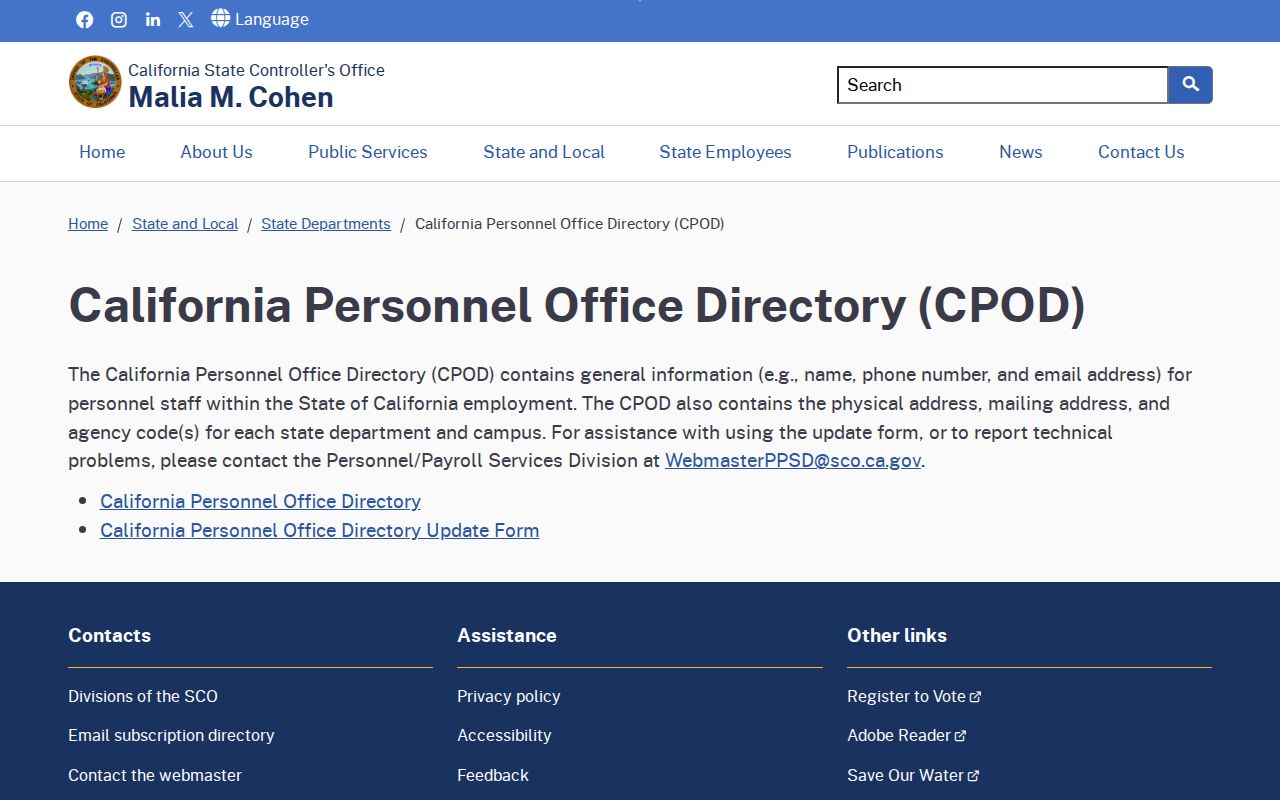
It is most useful for moving from an agency name to the office that can identify the right public contact.
San Mateo County Education Directories
Education creates one of the county's widest directory networks. The San Mateo County Office of Education directory searches staff by keyword, first name, last name, or department. Result cards can show the person's name, title, department, email, and work phone. Its department list includes Business Services, Curriculum and Instruction, Human Resources, Integrated Technology Services, Safe and Supportive Schools, SELPA, the Superintendent's Office, and The Big Lift.
| Search box | Input type | Use |
|---|---|---|
| Keyword | Optional text | Find a role or broad term |
| First name | Optional text | Narrow a known given name |
| Last name | Optional text | Find a staff surname |
| Department | Optional dropdown | Browse one program or division |
The SMCOE search interface makes these paths visible before a query is run.
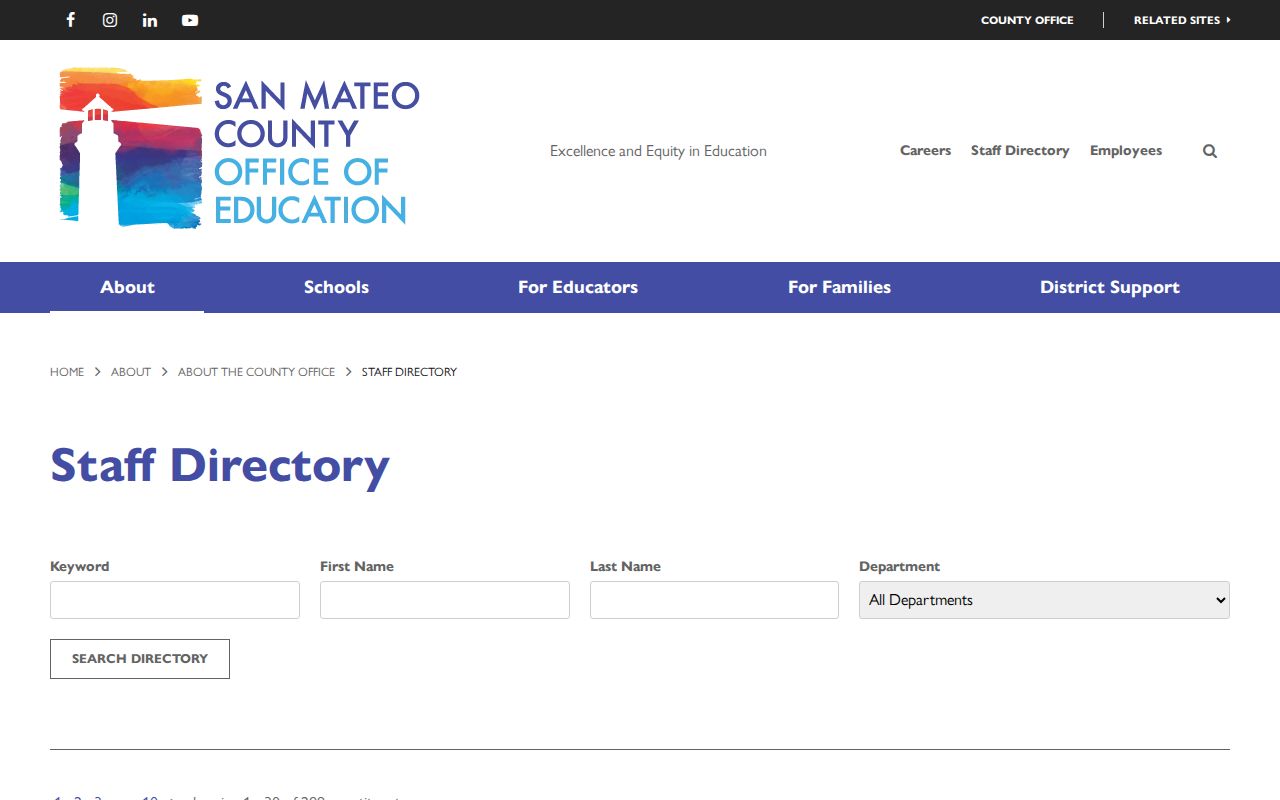
Department filtering helps when a surname is common or the staff member's exact title is not known.
College Directories Across San Mateo County
The San Mateo County Community College District directory spans College of San Mateo, Cañada College, and Skyline College. Faculty and staff pages may publish names, titles, departments, work phones, emails, office locations, and profile links. That makes the district directory more precise than a broad web search when the college or program is known.
The district serves nearly 20,000 students, so department and campus context can be as important as a name. Start at the district landing page, then follow the campus or unit that fits the person's public role. Historical classmate research belongs in yearbooks, newspapers, and archives rather than current staff listings.
The official SMCCCD directory landing page is the stable entry to those campus listings.
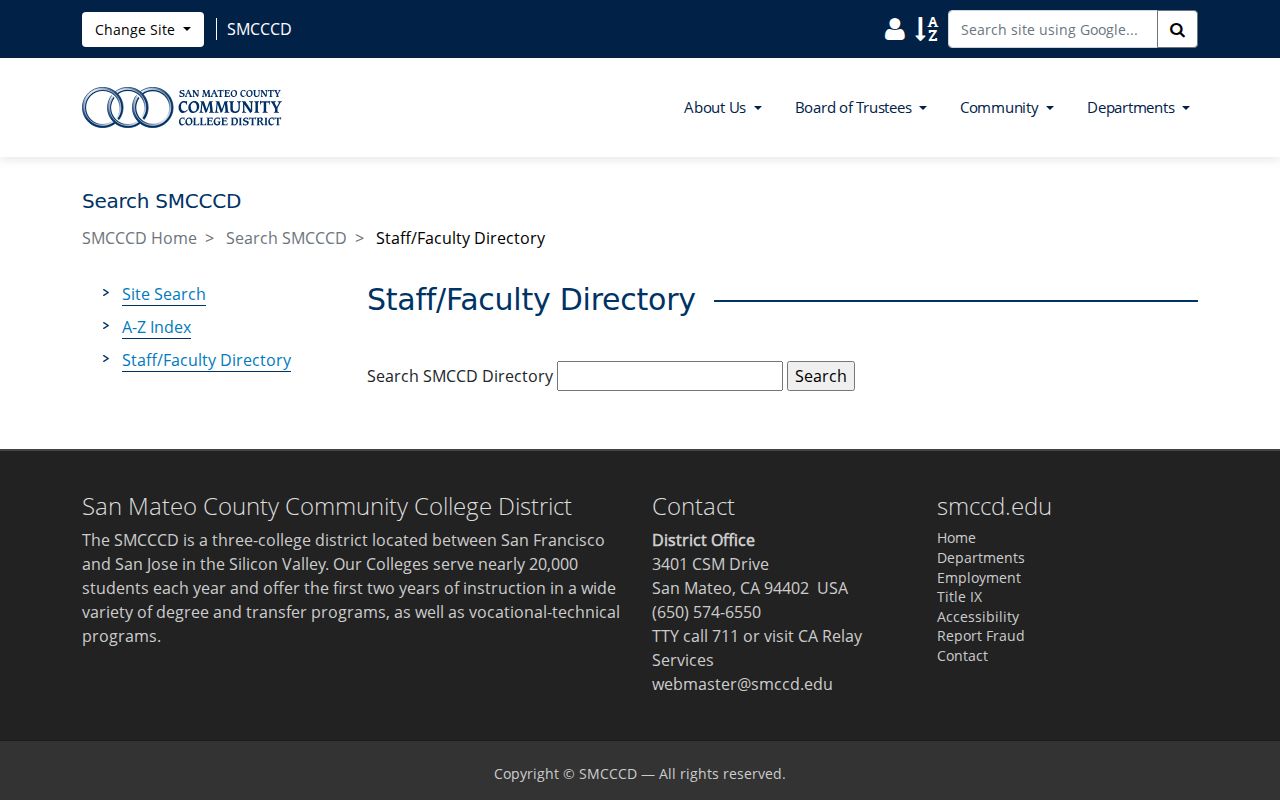
Its district scope prevents the common error of searching only one college when the role may sit elsewhere in the system.
Recorded Names as County Directories
RecorderWorks acts like a directory of parties to recorded instruments, but it is not a resident list. A name search may connect a grantor or grantee to a deed, lien, judgment, affidavit, map, or notice recorded since 1985. Searchers can choose all roles, grantor, or grantee; enter a person with surname first; allow a partial match; and add dates.
Insider tip: open a document number, then click a party name in the left menu. RecorderWorks can list other indexed documents tied to that name by type and recording date. The online system omits document images, so copies and image review go through public terminals or the County Clerk-Recorder at 555 County Center in Redwood City.
- Grantor
- The party giving or transferring an interest.
- Grantee
- The party receiving the recorded interest.
- Index
- A finding aid with filing details, not the full recorded image.
San Mateo County Business Directories
The county's fictitious business name search offers FBN name, file number, and filed-date modes, plus a partial-match option. The county business-license search covers unincorporated San Mateo County and accepts business name, address, type, account number, state license number, and a start-date range. A city business may instead belong in its municipal system.
State directories extend the trail. bizfile Online covers California business entities and public filings. DCA License Search accepts first name, last name, license number, business name, board, and license type. Contractor, real estate, and attorney records also have official board searches. These directories help verify a seller, confirm a license status, or connect a trade name to its public filing context.
Property Directories Need an APN
San Mateo County property sources are address-first, not public name directories. The secured tax lookup accepts an address or parcel number. GIS then links the parcel to map layers and recorded-map material. Planning recommends the nine-digit assessor parcel number, or APN, because an address search may miss property-specific information. Enter the APN without dashes or spaces.
The Assessor's assessment roll is open for inspection at the front counter, but no official public owner-name web search was verified. That distinction matters. Do not treat a parcel map as a confirmed resident list. For a broader explanation of custodians, copy access, and request law, use the San Mateo County public records resource.
Jurisdiction check: county Accela serves unincorporated areas, while cities keep their own permit systems. A postal city alone may not identify the correct directory.
Historic San Mateo County Directories
The San Mateo Public Library California Collection holds San Mateo city directories from the 1900s to the present, local newspapers on microfilm, Sanborn maps, and clipping files from the 1940s through the 1960s. The Redwood City Local History Collection has directories for 1907 through 1965 and 1979, plus newspapers, mortuary books, and the Schellens Collection.
Reverse, or criss-cross, directories flip the normal search. They begin with an address and identify the listed occupant or business. Catalog sources document San Mateo County reverse coverage for 1976 through 1995 and a series beginning in 1982. These ranges make twentieth-century address research stronger than nineteenth-century work.
| San Mateo | City directories from the 1900s to present |
|---|---|
| Redwood City | Directories from 1907-1965 and 1979 |
| County reverse books | Cataloged coverage for 1976-1995 and 1982 onward |
| Telephone history | Historical Association telephone books and a digitized April 1960 county phone directory |
San Mateo County Genealogy Directories
The San Mateo County Genealogical Society databases hold unusually focused name indexes. They include marriages from 1853 through 1948, vital notices from the San Mateo Times Gazette, early court records, appeals and venue changes, lis pendens, abstracts of judgment, and more than 54,000 mortuary records from 1888 through 1994. A mortuary index can connect a death to relatives and dates when an official vital-record index is not open.
SMCGS shares a practical research base with San Mateo Public Library at 55 W. 3rd Avenue. The library adds its California Collection and in-building FamilySearch affiliate access. A researcher can therefore check city directories, society indexes, restricted-at-home FamilySearch images, and local newspaper resources in one visit.
Note: Historical indexes are leads, not certified records; compare names, dates, addresses, and original sources before drawing a family connection.
County Archives Predate Countyhood
The San Mateo County Historical Association archives reach from 1830 to the present, earlier than the county's creation in the 1850s. Holdings include letters, ledgers, newspapers, manuscripts, books, films, maps, photos, scrapbooks, and a 1,500-volume collection with local histories, telephone books, and city directories. Its PastPerfect database offers online search and browsing for photos, objects, and archival records.
This time span explains why a county directory search may require sources created under earlier regional institutions. If the online catalog yields only a short record, use it to identify the collection and ask the archive about access. Parish registers listed through local archival guides and Great Registers at FamilySearch add further historical name trails, subject to each keeper's rules.